
Can dental implants rust or corrode?
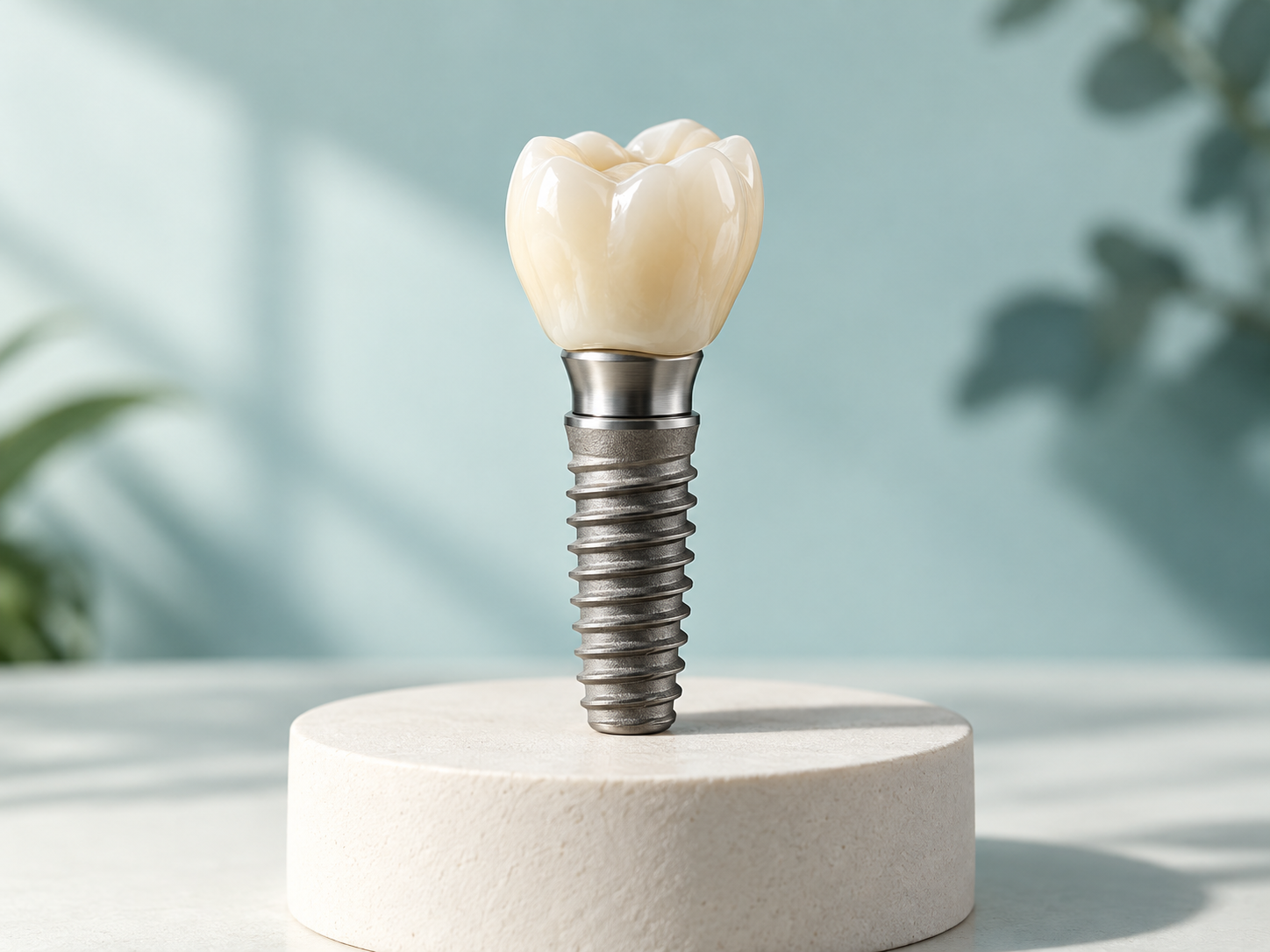
Titanium dental implants do not develop the familiar reddish rust associated with iron. However, it would be inaccurate to say that titanium can never corrode or release particles.
For someone with an implant, the practical point is to have new symptoms or visible changes assessed. A metallic taste, dark area or bleeding gum does not, on its own, tell you that an implant is corroding.
Why is titanium used for dental implants?
Titanium forms a thin protective oxide layer on its surface. That layer helps it resist corrosion. Bone can also form a close connection with an appropriately designed implant surface, allowing the implant to support a replacement tooth.
Corrosion resistance is a useful material property. It does not mean the implant is indestructible or needs no maintenance.
What does research say about corrosion and wear?
Research has documented the release of titanium particles and ions through wear and corrosion. A 2018 critical review examined their relationship with implant survival and complications.
This is more complex than a metal object “rusting away”. Findings about particles, surface changes and inflammation do not let us identify the cause of a particular patient's symptoms from appearance or taste alone. They also do not justify removing an otherwise healthy implant simply because it contains titanium.
Does a dark line mean my implant is rusting?
Not necessarily. A dark area near an implant crown can have different explanations, including the appearance of metal through the tissues or exposure of a component as the gum changes. A stain on the crown is a different issue again.
It is helpful to tell your dentist when you first noticed the change, whether it is progressing and whether there is bleeding, soreness or a change in how the tooth feels. Examination—and imaging when indicated—can help establish what needs attention.
What if I have a metallic taste or a loose crown?
Neither symptom is a reliable test for corrosion. A loose crown may involve the crown or its connection, rather than the implant in the bone. It still needs prompt assessment; continuing to bite on a loose restoration can create further problems.
Do not try to tighten, glue or polish an implant component yourself. Contact your dentist if the crown feels loose, your bite changes, or the gum around the implant persistently bleeds or swells.
How should I look after an implant?
The tissues around an implant need ongoing care. Daily cleaning and professional review help identify problems early. Your dentist or hygienist can demonstrate how to reach around your particular crown or denture attachment and recommend suitable cleaning tools.
The European Federation of Periodontology's implant-disease guideline addresses prevention and treatment of inflammation around implants. The focus is on maintaining health, rather than waiting for pain or a visible material problem.
Our guide to how long dental implants last explains the difference between implant survival, crown repairs and ongoing maintenance.
Have a concern about your implant?
If something has changed, contact Ethical Dental or call (02) 6652 3185 and describe the problem so the team can arrange an appropriate appointment. A symptom assessment is different from a consultation about a new missing-tooth replacement.
If you are considering an implant, our Coffs Harbour implant page explains the treatment, fees and alternatives. For a comparison of replacement options, read dental implant or bridge.